
In the context of the climate crisis, my generation was already born in the skin of a slow-cooked frog, but it was not until the covid pandemic and the outbreak of the Russian-Ukrainian war that our self-image was fully shattered. The ensuing shock and disillusionment have caused a definitive erosion of our supposedly fundamental values of rationality and humanism, and call for the need to redefine them. In the works of the emerging generation of artists, this reassessment is manifested in particular by a turn towards their countervalues: towards romanticism, spirituality, or the quest for the equal status of all members of the planetary community.

Jan Boháč
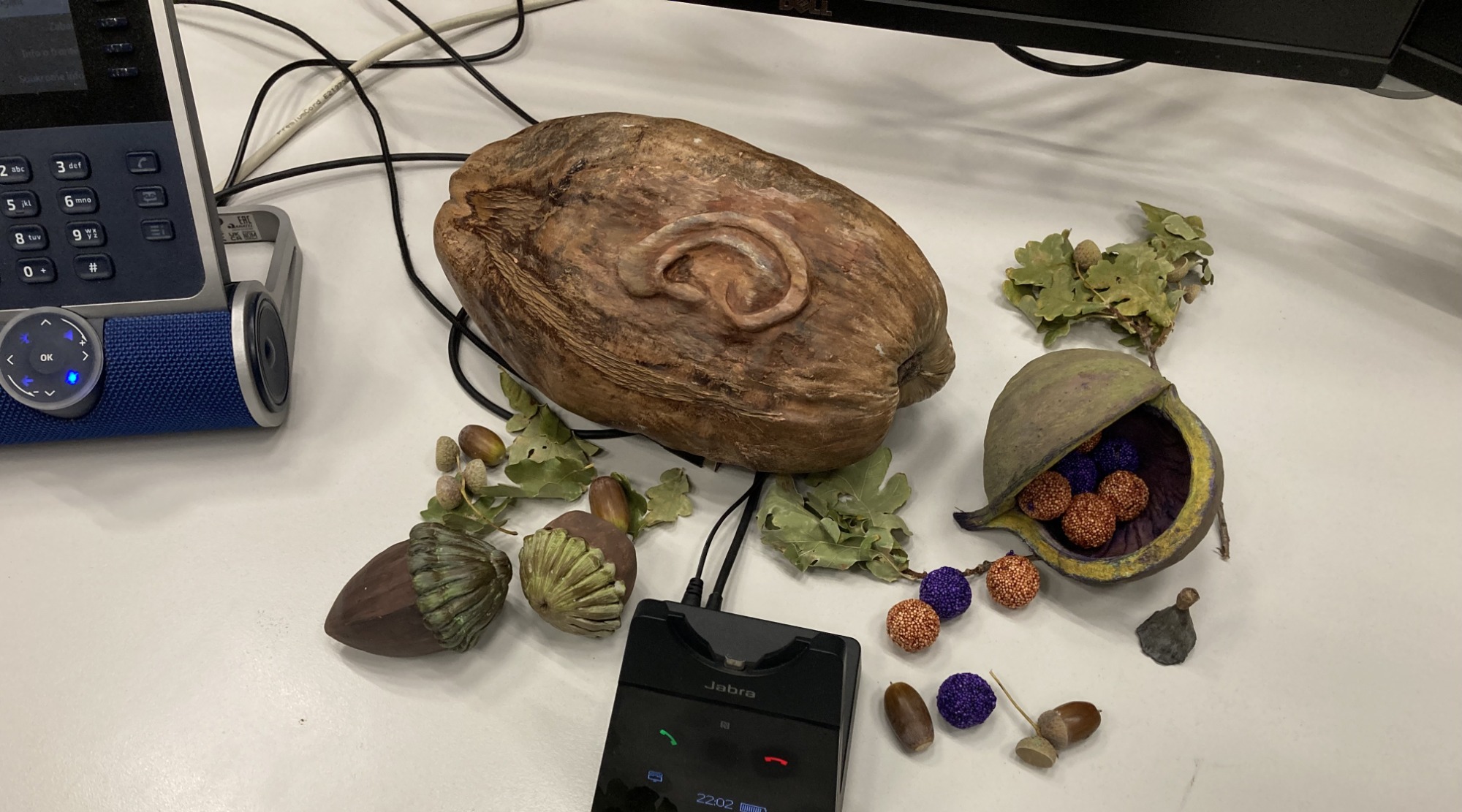
The foundation of Jan Boháč's artistic work is the theme of an accident or other dramatic event with the potential for catharsis. He compares the personal and intimate experience of a life-threatening borderline situation to the experience of a global accident in the form of facing current multi-crises. He sees a possible therapeutic process in modelling performative sessions on the borderline between the method of psychotherapeutic imagination and TTRPG (tabletop role-playing game).
The key moments of the exhibition are a series of participatory events where the audience is taken through a transformative situation of turning into a tree.
Jan Boháč, Jan Bražina, Patricie Fexová, Jonáš Garaj, Martin Kallus, Pavla Malinová, Julie Petrůjová, Helena Ticháčková
Curators: Ivana Hrončeková, Marika Kupková
How does contemporary art contend with its own perceived marginality — with the disheartening awareness that its critical and activist potential is readily absorbed by existing political structures, that gestures of revolt are swiftly commodified, and that its voice often seems muted in an age marked by war and the resurgence of authoritarian ideologies? In response to this prevailing scepticism, the exhibition foregrounds forms of (seeming) escapism. However, rather than retreating into speculative worlds, pop-cultural pastiche or neo-rural romanticism, these gestures remain anchored in the immediacy of lived experience — the here, the now, the provisional. Within this landscape of retreat, hope emerges as a recurring yet ambivalent motif. It appears as both a consoling belief and a latent threat — one that binds and immobilises, operating as a mechanism of self-deception and potential self-erasure. What presents itself as luminous and reassuring may, under scrutiny, reveal its parasitic nature. Lena Andersson articulates this tension with poignant clarity in her novel Wilful Disregard: "When the parasite of hope is removed from its host, the host either dies or is set free." In Andersson’s narrative, hope is tethered to romantic longing. Transposed into the context of this exhibition, it becomes a metaphor for the aspirations placed upon art in its socially transformative capacity. To relinquish hope in the fulfilment of that role does not preclude its reformulation — on the contrary, it may open space for its radical reassertion.


